
Entertainment
The Mote In God's Eye Is The Best Sci-Fi Classic You've Never Read

Though it routinely ends up on best of all time lists, somehow the 1974 science fiction novel The Mote in God’s Eye never actually seems to get read.
By Joshua Tyler
Though it routinely ends up on best-of-all-time lists, somehow, the 1974 science fiction novel The Mote in God’s Eye never actually seems to get read. It deserves to be mentioned alongside the work of great masters, and it is, in fact, the greatest work of two such acclaimed writers. It’s a collaboration between greats Larry Niven and Jerry Pournelle.
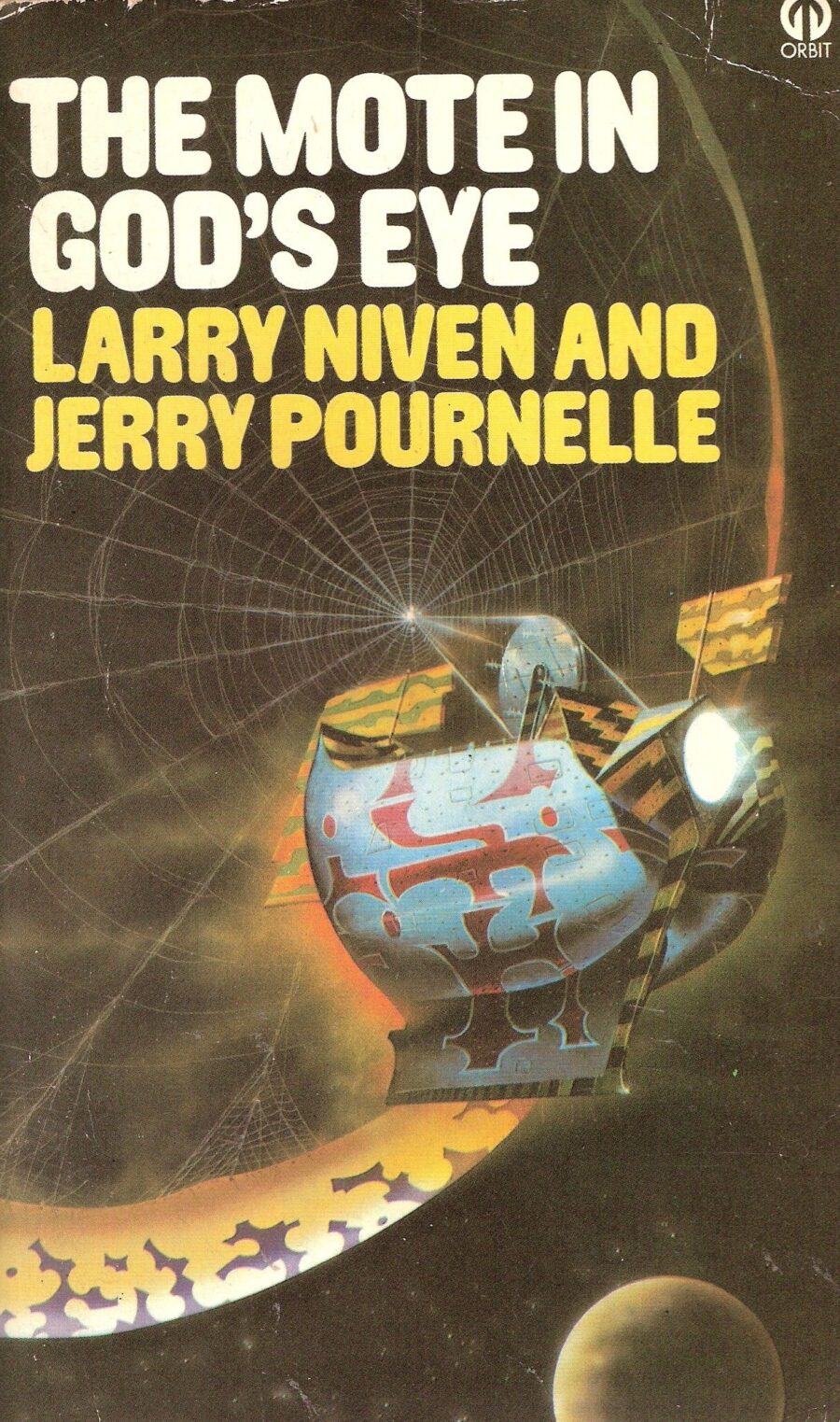
Maybe it’s the title that keeps so many otherwise dedicated hard sci-fi aficionados away from it. The Mote in God’s Eye sounds like a joke or some sort of bad pun. Read the book and it makes sense, but sitting there and staring at the cover, it seems like someone’s bad attempt at a Terry Pratchet parody rather than a serious science fiction story.
Serious is exactly what it is. In fact, it may be one of the best books ever written. At the least, it does something no other work of science fiction has ever done: It gets aliens right.
The Two Types Of Aliens In Science Fiction

Normally, in any sci-fi format, life from other planets is depicted in one of two ways. The first type is the monster. Ridley Scott’s Alien does that better than most, presenting a completely alien creature that lusts for human blood.
The second type is the intelligent alien. Intelligent aliens are always presented as if they’re one step away from humanity. They may look different from us, but rarely are they too different. They may think differently from us, but not too different.
Usually, a writer creating an alien creature bases it on some facet of human culture. Avatar’s Na’vi, for instance, may be blue, but we recognize their ideology and, to some degree, understand it as a variation on Native American culture. Klingons may be violent and warlike, but they build their lives around concepts we understand, like honor. Rarely is intelligent life from another planet depicted in any other way, and if we meet an alien who seems to think differently, we’re sure to discover we had it all wrong.
The Third Kind of Alien As Depicted By The Mote In God’s Eye
Mote does something few other science fiction works do right, by presenting a completely alien, fully intelligent life form. Rather than basing these creatures on an existing facet of human existence, Pournelle and Niven create a completely alien creature with an utterly alien lifecycle and a totally foreign way of living. From that the two authors extrapolated how such a creature might think. As any real alien creature would, the Moties think in ways we can’t possibly begin to comprehend.
Fear not potential reader, this isn’t a boorish examination of an alien culture. Pournelle and Niven have taken this brilliant construct and injected it into a well-told story.
In a far-off future, man has conquered the galaxy but failed to encounter any intelligent life. Thousands of years later, long after mankind has spread out into the galaxy, we make first contact.
The Mote in God’s Eye charts that first contact, and while it happens, humanity makes the same mistake James Cameron made in Avatar by assigning human ways of thinking to creatures that are absolutely not human. That mistake puts the entire human race in jeopardy and results in one of the most gripping science fiction stories ever told.
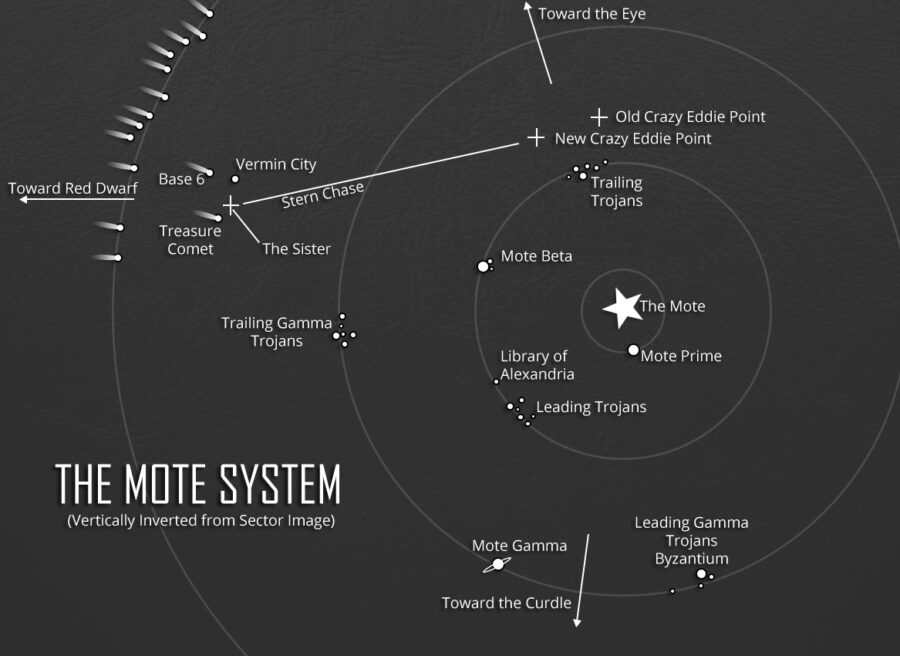
There’s a sequel, too, called The Gripping Hand, and it’s every bit as good as the Mote. Most of all, Pournelle and Niven’s work is original. More than thirty years after its writing, even in an era littered with recycled ideas, it’s never been duplicated. If you love science fiction or if you simply love originality, do yourself a favor and pick up a copy of The Mote in God’s Eye.
Entertainment
The 75-inch Hisense U8 Mini LED TV is officially the cheapest its ever been at 50% off

SAVE $1,250: As of April 22, the Hisense 75-inch U8 Mini LED ULED 4K TV is on sale at Amazon and Best Buy for just $1,249.99. That’s a savings of 50% from its original list price of $2,499.99 and its best price ever.
$1,249.99
at Amazon
$2,499.99
Save $1,250.00
$1,249.99
at Best Buy
$2,499.99
Save $1,250.00
If a new TV with a big screen, stunningly bright picture, and affordable tag is what you’re after, the 75-inch Hisense U8 TV is a great pick — especially now that it’s at a record-low price.
As of April 22, the Hisense 75-inch U8 Mini LED ULED 4K TV is down to just $1,249.99 at both Amazon and Best Buy. Its original list price is $2,499.99, which means you’ll save 50% or a full $1,250. That’s officially the best price we’ve ever seen on this model. Previously, it dropped to $1,297.99 during Cyber Week, but this price beats that one by nearly $50.
CNET (Mashable’s sister site, also owned by Ziff Davis) reviewer Ty Pendlebury called the 2025 U8 TV the brightest TV he’s ever reviewed, but added that it “complements that brightness with excellent contrast and well-saturated colors.” It’s remarkably vibrant no matter the environment and no matter what you’re watching. The ice during the NHL Stanley Cup playoffs will be absolutely glistening on this TV, with its 5000 nits peak brightness, up to 5,600 local dimming zones, and support for HDR in Dolby Vision, HDR10, HDR10+, and HLG. The 165Hz native refresh rate doesn’t hurt either. It won’t have any of the glitching and stuttering your old TV did.
It’s not just great for watching sports, either. Those dim-lit scenes in your favorite shows and movies will actually pop with the U8’s ultra-bright Mini LED panel. It’s even IMAX-enhanced for cinema-like picture quality. The Google TV smart platform provides a streamlined interface covering all the major streaming services, as well as Google Cast, Apple AirPlay, and Google Assistant for hands-free control.
Mashable Deals
On a normal day, we’d say the 75-inch Hisense U8 TV is too expensive for most folks, but as of April 22, it’s finally down to a price that won’t cause sticker shock.
Entertainment
Apples excellent AirPods Pro 3 are back on sale for just $200 — a $50 savings
SAVE $49.01: The Apple AirPods Pro 3 are 20% at Amazon and Walmart as of April 22. Snag a pair for just $199.99 (normally $249).

$199.99
at Amazon
$249
Save $49.01
Our very own Stan Schroeder is fresh off reviewing the new AirPods Max 2, Apple’s updated over-ear headphones. While he thought their noise cancellation has improved since the last generation, they still can’t block out sounds as well as the AirPods Pro 3: “Wearing them on a busy street makes the outside noise vanish in a spectacular fashion,” he writes of the earbuds.
So, if you’re an Apple user looking for best-in-class ANC, stick with the AirPods Pro 3. Right now, they happen to be on sale for just $199.99 at Amazon and Walmart — that’s a savings of nearly $50 and one of their best deals to date. They briefly hit $184 on Amazon back in February, but never since. (And they were $219.99 everywhere last Black Friday.)
For comparison’s sake, the AirPods Max 2 are up to $350 pricier depending on the color.
The AirPods Pro 3 actually have the same H2 chip as the AirPods Max 2, so they support the same suite of smart features like Adaptive Audio and Live Translation. On top of that, they come with a built-in heart rate monitor that “worked perfectly,” per Mashable contributor Adam Doud. (Read his full review.)
Mashable Deals
On their own, the AirPods Pro 3 will net you up to eight hours of battery life per charge with their ANC enabled. Their included charging case adds an extra 24 hours of use.
I can personally assure you that you won’t find the AirPods Pro 3 on sale for anywhere cheaper — even if you go for a used pair. In new condition, they’re $239.99 at B&H Photo and full price at Best Buy and Target. Then there’s Best Buy’s open-box AirPods Pro 3, which are are $204.99 in fair condition. Pass.
Entertainment
LA public schools pass screen time limits for students in a first
Los Angeles public school students may be returning to the age of college-ruled notebooks and Scantrons, following a Tuesday school board vote that will limit the use of computers, laptops, and tablets in classrooms.
Titled “Using Technology with Intention,” the new resolution mandates the creation of grade-level and subject-specific screen time limits across Los Angeles Unified School District (LAUSD) schools, including a complete ban on device usage for kindergarten and first grade. The use of one-to-one devices, like individual Chromebooks, will be discouraged for second through fifth grades, as well.
Revised guidelines will also address video-aided lesson plans, access to video streaming platforms like YouTube, and expanded restrictions on gaming and social media platforms.
District staff must present the revised tech use policy by June, which will go into effect for all LAUSD students beginning with the 2026-2027 school year. Guidelines will be reevaluated every year, and schools are tasked with tracking and sharing student screen time numbers with parents.
Mashable Light Speed
The resolution cites increasing concern about the effect of screen time on young minds and alleged screen addiction, including recent Center for Disease Control and Prevention (CDC) studies that show a correlation between high screen time and adverse health effects. The board was unanimously in favor of the tech restrictions, with one recusal.
“We know that tech is not going away and can be a powerful tool in the classroom. This is not about going backwards. This is about rethinking school time and screen time in schools to ensure we are doing what actually helps students learn best,” board member Nick Melvoin said during Tuesday’s meeting.
“This is not about going backwards. This is about rethinking school time…”
Advocates, parents, and even students have spent the last year lobbying for greater tech restrictions following the passing of a 2025 bell-to-bell cellphone ban restricting the use of personal devices during school hours. Schools Beyond Screens, a national classroom tech safety coalition founded by LAUSD parents and teachers, helped craft the resolution in collaboration with board members and co-sponsors Melvoin, Karla Griego, Tanya Ortiz Franklin, Jerry Yang, Kelly Gonez, and Rocío Rivas.
“Now is the time for a safe and science-backed approach to classroom technology, one that is not guided by Big Tech talking points like screen value over screen time,” the organization wrote in a press release following the decision.
“There is much work to be done, and this is only the beginning, but today, we are proud, grateful, and – for the first time in a long time – hopeful. Our kids may yet have the kind of public education that they deserve — one that is proven effective and free of undue digital distraction, harmful content, and corporate exploitation.”
Topics
Social Good
Family & Parenting

The 75-inch Hisense U8 Mini LED TV is officially the cheapest its ever been at 50% off
Apples excellent AirPods Pro 3 are back on sale for just $200 — a $50 savings


