
Entertainment
Coke And Pepsi Forced To Join Forces At Last, After Being Sued

By Matthew Swigonski
| Published

For decades, Pepsi and Coke have engaged in a bitter and bubbly rivalry, duking it out in an attempt to see which of the two beverage companies is able to come out on top and claim the soft drink throne as their own. But finally, after all of these sugar-filled years, the two companies have something in common that will force them to set aside their differences and work together to defeat a foe. In a lawsuit filed on October 30 in a Los Angeles Superior Court, Los Angeles County has alleged that Pepsi and Coke have purposefully misled the public regarding just how recyclable their plastic bottles are, leading to a negative impact on the environment.
Soft Drinks And The War On Pollution
According to the Coke and Pepsi lawsuit, Los Angeles County argues that the two companies have not only downplayed their role in the increasing pollution across the globe, but impacting the health of millions of people due to the prevalence of microplastics.
In a statement regarding the lawsuit, Los Angeles County supervisor Lindsey Horvath pointedly accused each company of not acting in good faith. “Coke and Pepsi need to stop the deception and take responsibility for the plastic pollution problems your products are causing,” Horvath said. “Los Angeles County will continue to address the serious environmental impacts caused by companies engaging in misleading and unfair business practices.”
Los Angeles County’s lawsuit claims that Coke and Pepsi should be held liable due to the companies’ stranglehold on the bottled beverage market, making up an overwhelming percentage of the plastic pollution currently afflicting many areas in the world, specifically in Los Angeles. As of 2024, Coke owns beverage brands such as Dasani, Fanta, Sprite, Vitamin Water, and Smartwater. Meanwhile, Pepsi currently owns brands like Gatorade, Aquafina, Mountain Dew, and Lipton.
Make Up A Hefty Amount Of Plastic Pollution Combined
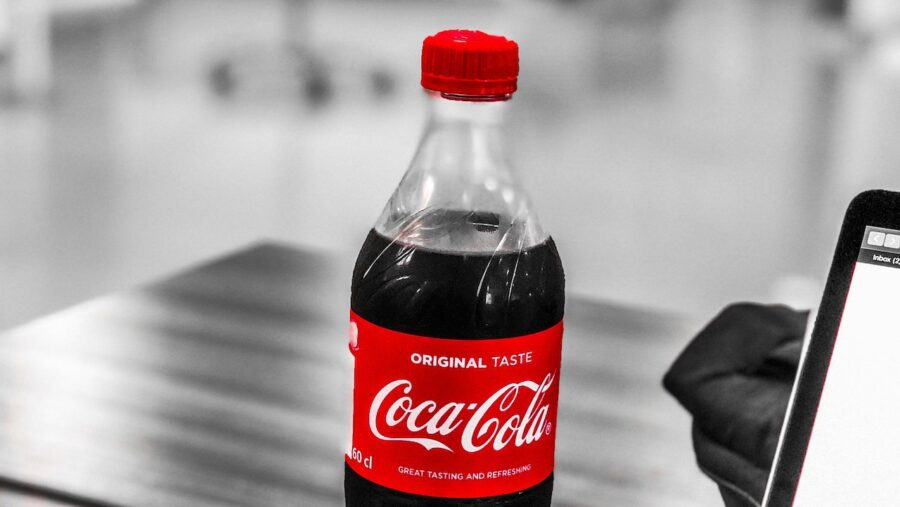
According to a recent study by a research team led by data scientist Win Cowger, Coke and its stable of brands are responsible for 11 percent of all plastic pollution plaguing our environment, with Pepsi accounting for an additional 5 percent of the pollution.
Over the last five years, the two beverage companies have been ranked as the world’s top plastic polluters, with Coke continuously owning the top spot. In the research team’s analysis, they concluded that Coke produces around 3.224 million metric tons of plastic annually, with Pepsi producing about 2.5 million metric tons each year.
As of November 2, neither Coke or Pepsi have commented on the allegations inside the lawsuit, though they have rebuffed previous claims that their plastic products were not recyclable. William Dermody, the vice president for media and public affairs for the American Beverage Association, whose members include Coke and Pepsi, denied that beverage companies purposefully mislead the public. “The allegation that our packaging is not and will not be recycled is simply not true,” Dermody said.
Won A Similar Lawsuit In New York
This isn’t the first time that Pepsi or Coke have each faced a lawsuit over the prevalence of their plastic waste polluting the environment. On October 31, Pepsi won the dismissal of New York’s lawsuit accusing the beverage company of polluting the environment with single-use plastic packaging. New York Attorney General Letitia James was seeking to hold Pepsi liable for endangering Buffalo’s water supply by generating 17 percent of the plastic waste found in and near the Buffalo River, but the judge presiding over the case threw the case out, claiming that the pollution was the responsibility of the consumers, not the company to adhere recycling guidelines.
Source: AP News
Entertainment
The Dark R-Rated Sci-Fi Horror Hidden Gem You Can Stream Without Netflix

By Jason Collins
| Published

Here’s an unpopular opinion: there haven’t been that many good horror movies in the past 20 years since the genre was reduced to action scenes combined with jump scares and loud audio mixes. They all follow the same formula and feature nebulous elements, such as demonic nuns or killer dolls (this statement excludes the Child’s Play franchise.) However, there have been a few movies that have been worth revisiting since their release, and Pandorum is definitely one of those movies.
Cannibals, INNNN SPACEEEEE!

Pandorum follows the story of the remnants of the human race who, following the depletion of Earth’s resources due to human overpopulation, board an interstellar ark, which embarks on a 123-year trip to colonize a different Earth-like planet. Its passengers are placed in hypersleep, and a rotating crew of techs and engineers wake up biennially to maintain the ship. However, not everything went according to plan, and sometime later, two members of the flight crew, Bower (Ben Foster) and Payton (Dennis Quaid), awakened.
The improper emergence from hypersleep leaves them with partial amnesia and Pandorum, a space-related disorder that causes psychosis when under stress. They also find the interstellar arc in a horrific condition; their journey still lasts, but the unstable nuclear reactor is causing power surges throughout the spaceship, which Bower sets out to find. But instead of a faulty reactor, he finds cannibalistic space mutants he now has to evade while attempting to reset the reactor and restore normal power to the ship.
A Psychological Thriller Wrapped In Sci-Fi Horror

As it turns out, the cannibalistic space mutants have been on board for quite some time, hunting several crew members who had been awake for some time as well; some of whom have also developed the Pandorum disorder. By the film’s end, several plot twists occur, keeping the viewers at the edge of their seats, as the horrifying facts about the ark, its inhabitants, and the mutants begin to reveal themselves, after which a fight for survival ensues.
We won’t spoil Pandorum for any of our readers, but we’ll state that the script, which is actually an amalgamation of two separate but similar works, is good, with a good introduction to the story. The screenplay is also masterfully done, while the whole narrative immerses the viewers in exploring the ship and its history along with the protagonists. The downside is that certain characters could have been developed better.

The special effects were impressive, but they weren’t enough to save Pandorum from a disappointing theatrical run. Despite a reported $33 million production budget, the film earned only about $20 million worldwide. We usually argue that the box office says a lot about a movie’s quality, but there are always exceptions. Pandorum is one of them. Its ambitious ideas and gripping premise deserved a much better reception, even if the execution doesn’t always live up to the script’s potential.
Despite its sci-fi setting, Pandorum is first and foremost a psychological survival horror film. It explores isolation, madness, memory, and identity while forcing its characters to confront the collapse of civilization into pure anarchy. It’s a tense, unsettling experience that uses its futuristic backdrop to amplify the horror rather than overshadow it.

Furthermore, its ending promised a sequel, which was most likely scrapped following the film’s poor performance at the box office. Those interested in watching Pandorum can stream the movie for free on Pluto TV, The Roku Channel, and Amazon Prime Video.
Entertainment
Apple could deactivate leased iPhones remotely for non-payment, report says
The iPhone 18 is about to launch, along with the final version of its operating system, iOS 27, most likely in September. But a new report says it may arrive with a feature that lets Apple, and third-party lenders, remotely deactivate phones if customers fall behind on payments.
With the iOS 27 beta now widely available, 9to5Mac found code that would let Apple place delinquent iPhones in “Restricted Mode.” This would limit users to a short list of widgets and apps, including the App Store, Clock, Settings, Wallet, and Passwords, according to the report.
In theory, 9to5Mac says the system could work like this: Authorized financing partners who lease iPhones to customers get to perform regular status checks to see if the contract is still valid. If a customer falls behind, Restricted Mode would be activated.
The feature is “unequivocally present” in the iOS 27 beta, according to 9to5Mac — and a future update to iOS 26 could bring this feature to older iPhones as well.
The era of internet-connected “smart” devices has had plenty of benefits for consumers, but as consumer advocates have long warned, it also allows brands to remotely turn off devices.
Why might Apple be testing a tool like this right now? Let’s dive in.
Mashable Light Speed

Credit: Timothy Werth / Mashable
If you’ve bought any new tech products recently, you’ve probably noticed: New devices are getting really expensive. Just this month Apple raised prices on a variety of its products. iPhone prices haven’t risen just yet, but Tim Cook has prepared the ground for an “unavoidable” iPhone price hike.
Thanks to the ongoing global memory chip crisis known as RAMageddon, new phones now require a serious investment. The new foldable phones released by Samsung this week were preceded by a new Galaxy credit card program.
Apple is believed to be readying a new leasing program of its own. Bloomberg’s Apple oracle, Mark Gurman, says Apple will launch the “Apple Upgrade” leasing program later this month.
Gurman calls it “one of the biggest-ever changes to how the company sells” new devices — and says Apple Upgrade will be part of a partnership with the online lender Klarna, giving buyers a lease-to-buy option. iPhone customers who qualify could make monthly payments over two years.
The code discovered by 9to5Mac also reportedly includes another type of locking mechanism called “Partner Finance Lock,” which would stop users from trying to resell a financed device.
Clearly, Apple and Klarna can’t let customers who miss payments continue to use leased iPhones indefinitely. But it’s also an uncomfortable reminder of how much control Big Tech has over our devices.
Mashable reached out to Apple for comment about Restricted Mode; we’ll update this story if this famously taciturn tech giant provides new information.
Entertainment
Instagram is coming for creepy Meta glasses videos
Meta’s smart glasses allow creators to record strangers without holding up an obvious camera. Unsurprisingly, it’s enabled a lot of bad behavior. Now, Instagram is placing new limits on what happens to that footage once it reaches the platform.
In an Instagram Story (first reported by Business Insider), Instagram head Adam Mosseri said the platform would remove smart-glasses videos that show people being harassed or taken advantage of.
“If you’re posting content that is taking advantage of people and harassing them, like a lot of these pickup line kind of videos that we’ve heard of and seen, then we’re going to take the content down,” Mosseri reportedly said. “We don’t want people to be surreptitiously taking videos of other people and harassing them and then posting them on our platform,” he added.
The belated crackdown covers formats including pickup videos — in which creators approach people who may not realize they are being recorded — and prank videos targeting cashiers, fast-food employees, and other workers.
The report also noted Instagram had deactivated two pickup-artist accounts that used smart glasses to film women in public, both with more than 1 million followers. Meta confirmed the accounts were removed for violating its policy against harassing content, but did not say when the removals occurred.
Meta also didn’t explain how Instagram will determine when an interaction becomes harassment, or how many posts and accounts have been removed. But recent incidents show why the platform is under pressure to draw a clearer line — and how much damage can be done before a video is taken down.
Why Meta’s smart glasses have raised privacy concerns
Meta first introduced its Ray-Ban smart glasses in 2021 and has since expanded its wearable lineup through partnerships with Oakley and Kylie Jenner. Depending on the model, the glasses can record photos and videos, play audio, make calls, and respond to requests through Meta AI. Meta has also made it easy for users to upload their smart glasses footage to Instagram, and this content is often labeled “Made with Meta Ray-Ban.”
Mashable Trend Report
A small white LED on the front flashes when the camera is operating. In a July 7 explainer, Meta said its second-generation glasses automatically disable the camera if they detect the light has been covered — a response to reports of users tampering with the recording indicator. People in at least 30 states are even offering this tampering as a service, according to journalist Joanna Stern. Meta also said it actively removes advertisements, posts, and Marketplace listings that offer Meta Ray-Ban-tampering services.
That discretion has helped fuel an ecosystem of pickup, prank, and “troll” accounts built around filming strangers without their knowledge. Creators have secretly recorded attempts to get women’s phone numbers in gyms, airports, bars, stores, and public streets. The women are then exposed to audiences that may scrutinize their appearance, sexualize them, or criticize how they responded to an interaction they did not know was content.
Back in April, one woman discovered online footage of a man asking for her number after he recorded their conversation through smart glasses. She said the video was posted despite her refusing permission.
Other videos use unsuspecting retail and restaurant employees as participants in pranks, confrontations, or deliberately uncomfortable exchanges. In one recurring Meta glasses prank, creators spray a foul-smelling substance on a candle, then approach Walmart shoppers or employees and ask them to smell the scent. In another video, a creator placed fake feces in a fast-food restaurant bathroom, then asked an unsuspecting cashier to leave the counter and inspect it.
There’s more: one creator recorded visits to massage parlors and used sexually suggestive captions to tease explicit pay-per-view versions of the footage. Another built an Instagram page around non-consensually filming women’s bodies. After Mashable provided Meta with those examples back in January 2026, the company disabled both accounts for violating its policy on adult sexual exploitation.
Former prank creator Brad Podray, previously known online as Scumbag Dad, told Mashable in January that creators frequently target women and service employees because they are likely to provide usable reactions while being less able or willing to confront the person recording them.
“They want people who are good on camera, so they’re going to hit fast food employees, and they’re going to hit pretty girls,” Podray said. “A lot of random women walking around aren’t going to want to participate in a skit if you ask them to, so they remove the agency entirely by just running the glasses.”
Meta warned in an October 2025 statement that “people shouldn’t use them for engaging in harmful activities like harassment, infringing on privacy rights, or capturing sensitive information.” The company issued this warning after the University of San Francisco sent out a campus safety advisory. Multiple women reported that a man wearing Ray-Ban Meta glasses had approached them with unwanted comments and inappropriate dating questions. The university said he may have been recording these interactions for a pickup artist account on Instagram and TikTok.
Meta’s glasses are, of course, used for plenty of legitimate purposes beyond this inappropriate and often immoral content. Many wearers use them to capture travel, sports, concerts, and everyday moments from a first-person perspective without holding a phone. The glasses can also play music, make calls, send messages, translate conversations, answer questions about what’s around you, and provide directions or reminders through Meta AI. Athletes and creators also use them to record hands-free footage, while blind and visually impaired users can ask the glasses to read labels, identify objects, select clothing, and describe their surroundings.
Nevertheless, as the glasses become more common and harder to distinguish from ordinary eyewear, Instagram’s challenge will be keeping creators from finding new ways to turn that discretion into content at someone else’s expense.

Report: LIV Golf settles $1M trademark lawsuit
Roughriders mourning Jayden Dalke entering game vs. Elks


